

A Generation-Defining Moment for Young Women
For Young Women Abortion has become an Overriding Concern
For Young Women Abortion has become an Overriding Concern
The Dobbs decision that overturned Roe vs. Wade’s 50-year precedent legalizing abortion in the US was a seismic event. But as polls started trickling out this summer, abortion ranked relatively low among the public’s concerns. Even as it became increasingly important for Democrats, abortion did not overtake other pressing issues such as inflation for everyday Americans.
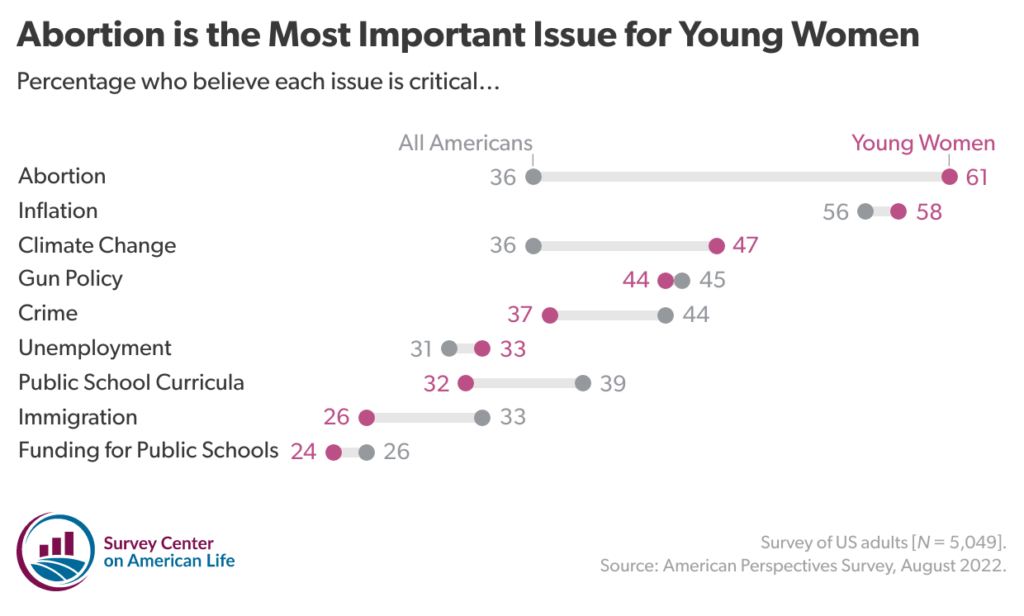
In more than 15 years of conducting public opinion surveys, I have never seen abortion outpace concerns about “kitchen table” issues, such as inflation, the availability of jobs, health care, or even the cost of education. But for young women, no issue is more important than abortion. A brand-new poll that I conducted with my colleague, Karlyn Bowman, found that 61 percent of young women (age 18 to 29) believe abortion is a critical issue, a larger percentage than for any of the other eight issues we asked about. They ranked abortion 25 points higher than the general public overall.
Continue reading on American Storylines
Generation Uncoupled

Generation Uncoupled: America's New Gender Divide and the Crisis of Human Connection
Buy NowSurvey Reports