

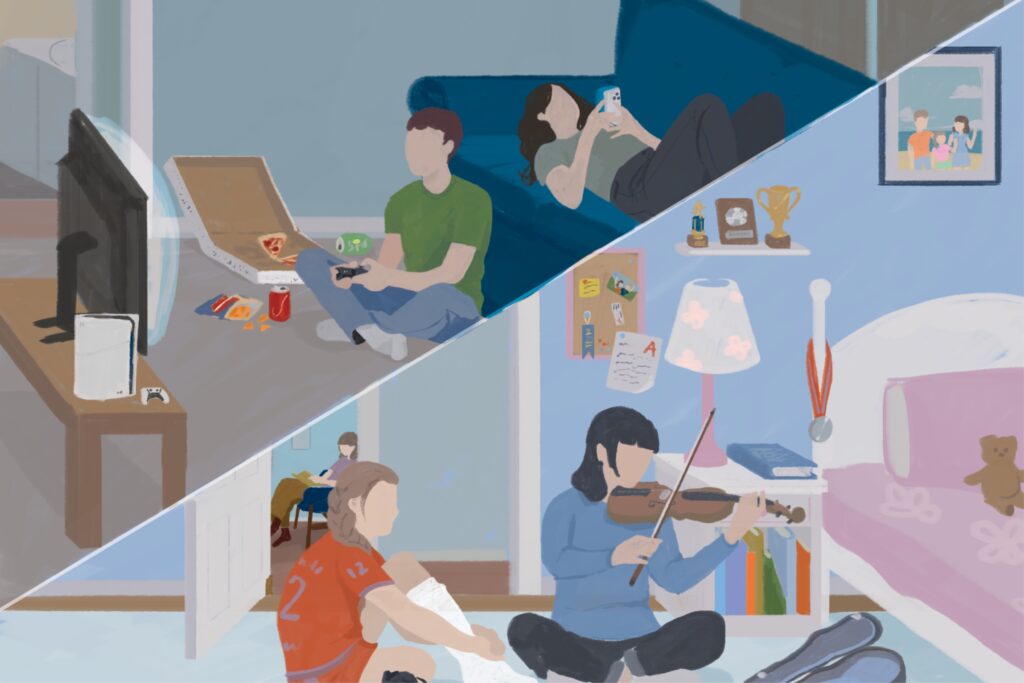
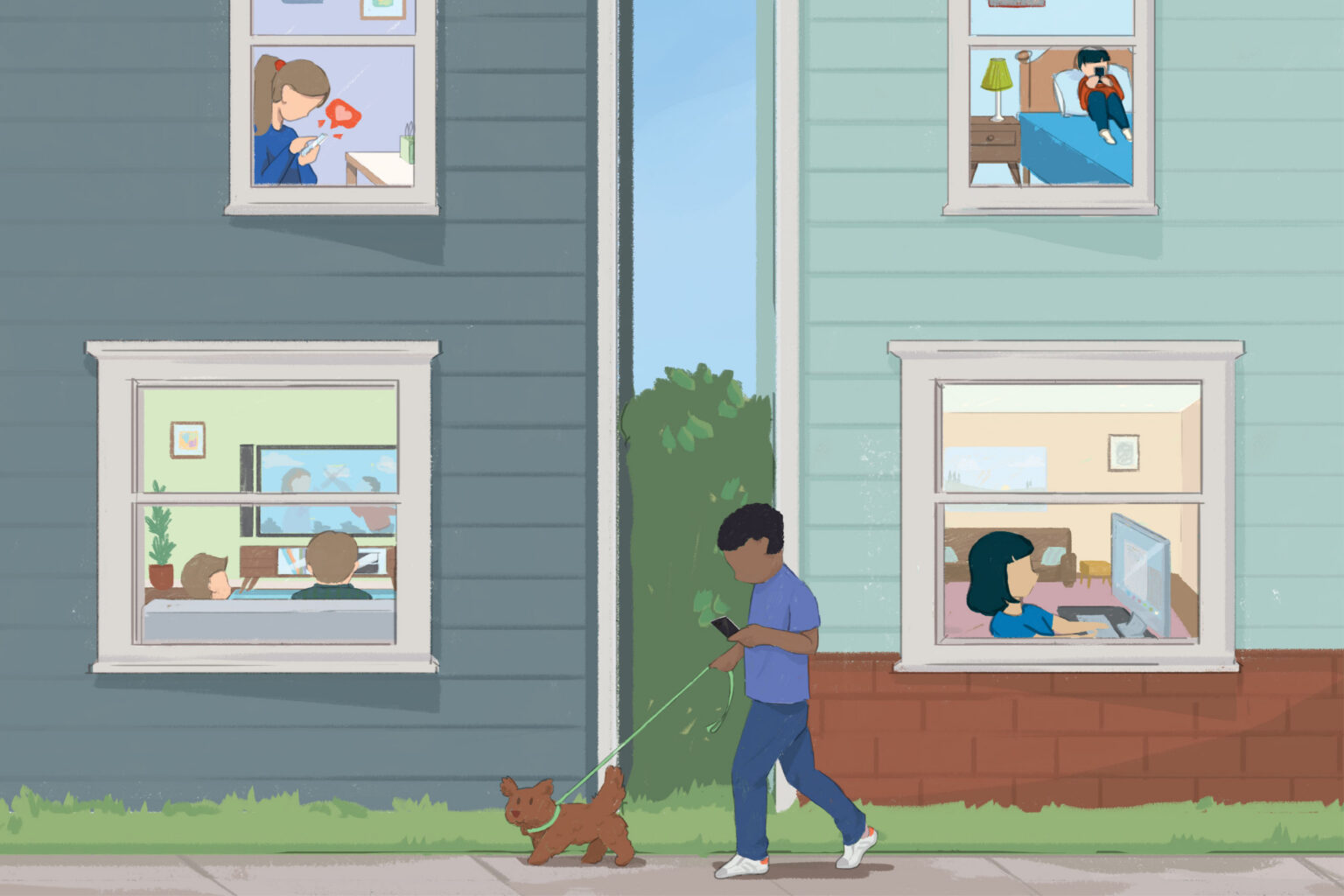

Generation Uncoupled: America's New Gender Divide and the Crisis of Human Connection
Praise for Generation Uncoupled
“In this well-written book, Daniel Cox combines creative empirical research with thoughtful reflections about where this relational crisis is leading and what we should do about it. Regardless of your politics, if you’re concerned about the future of America—and who isn’t? — this book is a must-read.”
Robert D. Putnam | Professor Emeritus, Harvard Kennedy School
Most Popular

America’s Parents Are Civic Superheroes
Americans are retreating from civic life—but college-educated parents are stepping up, volunteering, hosting gatherings, and keeping communities connected while others stay home.

Are Political Differences Behind America’s Dating Woes?
Political divisions between young men and women are preventing them from forming meaningful relationships.

Are Young Men Really Going to Vote for Donald Trump?
Young men are leaning towards Trump in recent polls. Are the polls accurate?






Significant Figures
View All- Young Women Are the Most Likely to Believe that Men Are at the Root of Their Problems
- Young Men Increasingly Support Restrictions on Online Pornography
- Why Young People Feel Misunderstood By The Opposite Sex
Young Women Are the Most Likely to Believe that Men Are at the Root of Their Problems
Young women are unique in their perceptions of gender discrimination in American society. More than two-thirds of young women believe that women face “a lot” of discrimination in American society. Fewer—though still a majority—of young men and older women share this view. There is a sharp political divide as well. Democratic women are far more likely than Republican women to believe women face considerable prejudice in the United States. But it is not only in the existence of discrimination that Democratic and Republican women are at odds. Democratic women are far more likely than Republican women to say that men are responsible for many of the problems women have in American society.Young Men Increasingly Support Restrictions on Online Pornography
In the last four years, young men have grown much more supportive of restricting access to online pornography. While all young Americans—ages 18 to 24—have become increasingly disposed towards limiting access to online pornography, young men have experienced the most substantial shift. In 2021, less than half (43 percent) of young men said they would support making it more difficult to access online pornography. By 2025, nearly two-thirds of young men said they were in favor of more restrictions on Internet pornography. Read more.Why Young People Feel Misunderstood By The Opposite Sex
Surveys show a growing gap emerging between young men and women. But the gender divide is not simply about politics, but a more fundamental misunderstanding. Our most recent survey revealed that only 42 percent of young men believe young women understand the problems men face in American society. Similarly, a majority (72 percent) of young women feel young men don’t understand their struggles. To better understand why so many young men and women feel misunderstood we decided to ask them to share their views, in their own words. Read more.In the News
View All-
The New York Times September 30, 2026
‘Attention Infidelity’ Is Ruining Romance
-
Vox September 23, 2026
It’s not your imagination — dating has gotten way more combative lately
-
The Cut September 15, 2026
‘My Husband Has No Friends’
-
TIME September 4, 2026
Why You Shouldn’t Work on Labor Day
Mine is not a new fear, and I realize it is born out of a kind of nostalgia. From the pollster and public opinion researcher Daniel Cox’s forthcoming book, “Generation Uncoupled: America’s New Gender Divide and the Crisis of Human Connection,” I learned a new term: “attention infidelity.” Cox defines it in a somewhat unusual and expansive way: when a partner’s digital life intrudes on an in-person connection.
This kind of “infidelity” can include looking at sexually explicit material or engaging in suggestive social media interactions, but more often it is just the banal distraction of dead-eyed scrolling. “Instead of reaching for each other,” Cox explains, “we snatch up our digital devices that flood us with an endless stream of hyper-curated content.”
When daters lack experience and are primed to see the worst in each other, the very normal aspects of courtship — negotiating boundaries, establishing trust, navigating conflict — are seen as dealbreakers. “There’s a growing discomfort with the normal friction, that if you say or do the wrong thing, it’s cringe, it’s disqualifiable; there’s no appetite for any kind of misstep,” Daniel Cox, the director of the Survey Center on American Life and author of Generation Uncoupled: America’s New Gender Divide and the Crisis of Human Connection, told Vox.
Maria, who lives in a suburb of San Francisco, tells me her husband of 22 years doesn’t go out anymore. She adds that he doesn’t try reaching out to his old friends. “He was on the couch when I left to run errands and play mahjong last Saturday,” she says. “I was gone for, like, six hours, and when I got home, he was still there. Did he even get up once?”
By now, we’ve heard all about the male-friendship recession and how isolated men have become. The topic is hardly news. (Never mind the fact that women, too, are in crisis when it comes to finding community.) In 2021, a study from the Survey Center on American Life reported that 15 percent of men had zero close friends, up from 3 percent in 1990. Five years later, not a week goes by that we don’t read about guys with no one to fist-bump. Sad headlines include “Where Have All My Deep Male Friendships Gone?” and “Middle-aged Men Are Among Society’s Loneliest People.”
Plus, if workers disconnected during their off-hours, they’d also have more time to nurture the offline connections that our country desperately needs. I would agree that we’re experiencing what psychologist Marisa Franco calls a “friendship famine.” Since 1990, the percentage of American adults who say they have no close friends has quadrupled, according to last year’s American Perspectives Survey. That is crushing. The quality of our friendships and social connections is one of the strongest predictors of our health, happiness, and how long we’ll live, according to the Harvard Study of Adult Development. It’s more important than things like our cholesterol, genes, and salaries. And being lonely is as toxic for our health as alcoholism or smoking.
Of course, as Americans know one another less, we help one another less. This can explain why volunteerism has also been declining. That’s particularly sad because banding together has long been a central part of our national character, as Alexis de Tocqueville famously wrote in Democracy in America. It’s especially important in a country like ours where people can’t rely on a strong social safety net when they hit hard times.